Kuala Lumpur’s property market is entering a new phase where connectivity defines value more than branding alone.
As the city expands and car ownership trends shift, Transit-Oriented Developments (TODs) — projects directly linked to public transport — are becoming the smart investor’s focus.
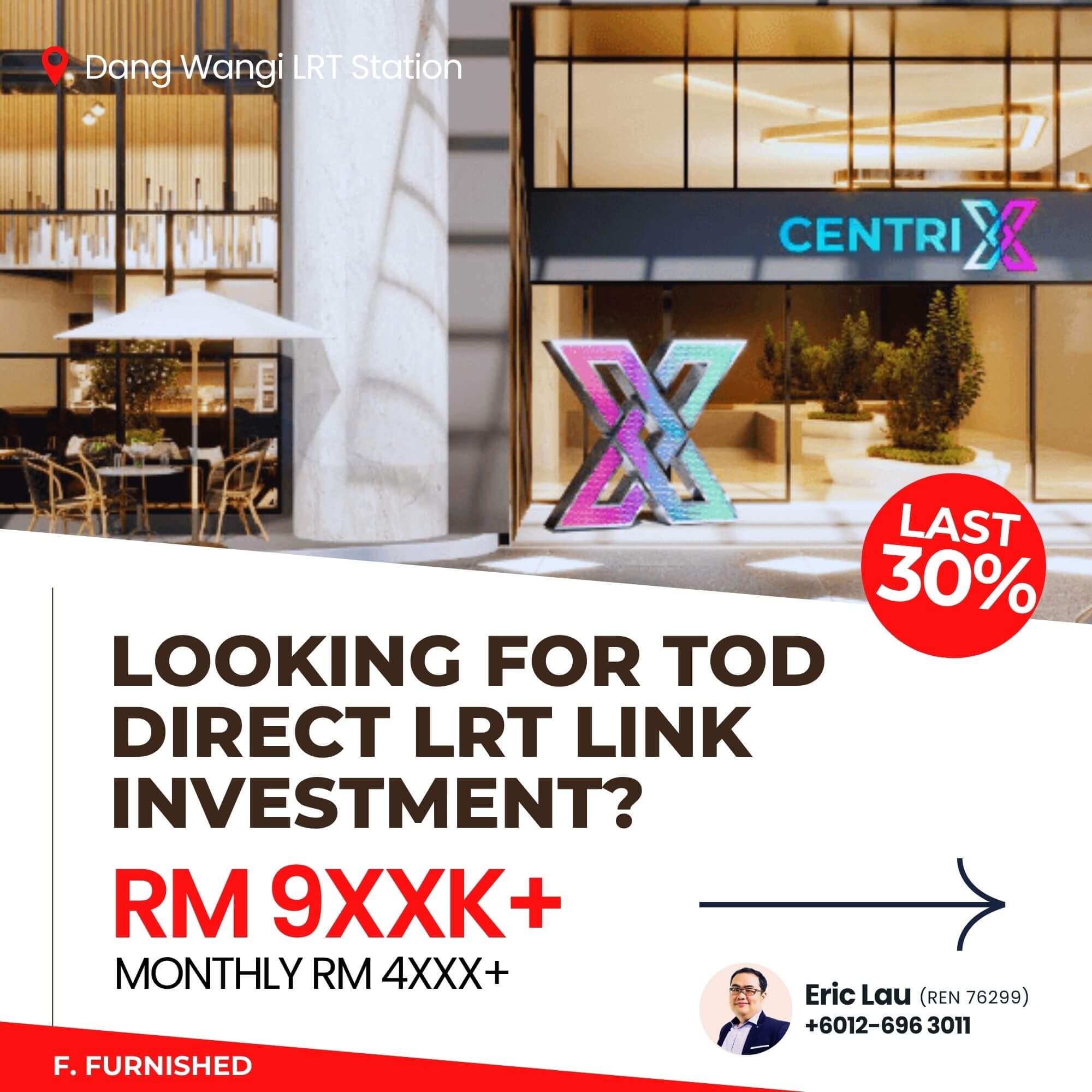
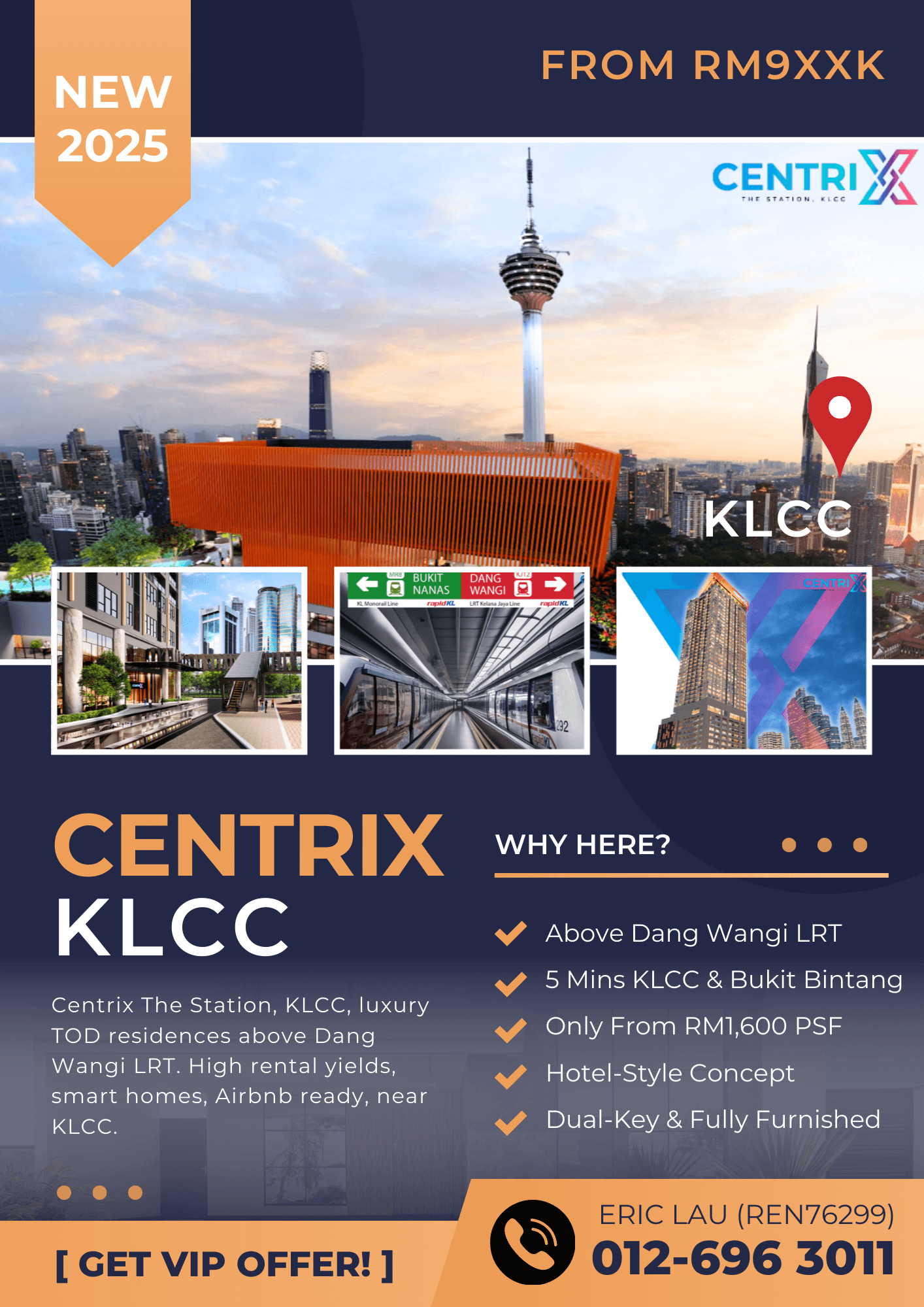
One of the standout TOD projects within the KLCC corridor is Centrix The Station KLCC, strategically built above the Dang Wangi LRT Station.
For investors, this single design decision changes everything: it influences rental yield, occupancy, resale demand, and long-term appreciation.
🚆 What Is Transit-Oriented Development (TOD)?
Transit-Oriented Development (TOD) refers to urban projects built around or directly connected to major public transport hubs, such as LRT, MRT, or Monorail stations.
The concept emphasizes walkability, accessibility, and integrated living, where residents can:
- Commute easily without driving
- Access retail and offices within walking distance
- Enjoy efficient connectivity to business and leisure hubs
In modern cities like Tokyo, Singapore, and Hong Kong, TODs are proven to deliver higher property values and stronger rental demand due to their convenience and lower transportation costs.
In Malaysia, KL’s government is actively promoting TODs under the Greater Kuala Lumpur Plan, making such developments central to the city’s sustainable growth model.
📍 Centrix KLCC: Directly Above Dang Wangi LRT Station
Centrix The Station KLCC is among the few residential towers in Kuala Lumpur directly connected to an existing LRT station — not merely nearby, but integrated above it.
This unique configuration offers:
- Lift-to-Train access (no road crossing, no need for Grab or parking)
- Sheltered connectivity to the city network, rain or shine
- Zero first/last mile travel cost, increasing convenience for tenants
The Dang Wangi LRT Station connects directly to the Kelana Jaya Line, one of Kuala Lumpur’s most important rail routes, linking:
- KLCC Station → 1 stop
- Bukit Nanas Monorail interchange → 1 stop
- Masjid Jamek (MRT & LRT interchange) → 1 stop
- TRX & Bukit Bintang → 2 stops (via interchange)
- KL Sentral & KLIA Express → within 25–35 minutes
This level of accessibility makes Centrix KLCC a true “zero-commute property”, appealing to tenants who prioritize time, cost, and comfort.
Price & Units
💼 How TOD Location Translates into Investment Value
1. Higher Occupancy Stability
Properties directly linked to rail networks maintain steady occupancy rates even during market slowdowns.
Professionals and expatriates often choose transit-linked residences because they save both commuting time and transport costs — major factors in rental decisions.
For investors, this means lower vacancy risk and consistent cash flow.
2. Rental Premium for Convenience
Tenants are often willing to pay 5–10% more in rent for units located within walking distance of a train station — and even more for those physically connected like Centrix KLCC.
Short-stay guests (Airbnb) also value direct train access from KLIA and proximity to KLCC/Bukit Bintang, enhancing yield potential.
3. Future-Proof Capital Appreciation
As Kuala Lumpur continues expanding its MRT2, MRT3, and LRT extensions, transit-linked properties will appreciate faster than car-dependent ones.
Global data shows that TOD properties often outperform non-TOD assets by 20–40% in long-term appreciation, especially when supported by urban density and mixed-use components.
Centrix KLCC benefits from being:
- Already on an operating LRT line
- Within 1 km of KLCC and Bukit Nanas Monorail
- Linked to TRX via interchange
This locational edge ensures relevance and liquidity for the next decade.
🏙 The “Connectivity Premium” Explained
The connectivity premium is the market’s willingness to pay extra for a location that reduces daily friction.
In KL, the connectivity premium typically appears as:
- Higher rental rates
- Faster lease-up time (units rented within weeks, not months)
- Stronger resale value per sq ft
- Lower tenant turnover
For instance, a typical condo 800 m away from a station may rent at RM 4.50 psf, whereas a true TOD project like Centrix KLCC can command RM 5.00–RM 5.50 psf — translating into a 10–20% uplift on annual rental income.
Price & Units
🏢 Centrix KLCC vs. Conventional KLCC Condominiums
| Factor | Centrix The Station KLCC | Conventional KLCC Condo |
|---|---|---|
| Transit Link | Directly above LRT (Dang Wangi) | 5–15 min walk or drive |
| Target Tenants | Professionals, short-stays, expats | Corporate expats, long-term only |
| Yield Potential | 5%–7% gross | 3.5%–5% gross |
| Occupancy Stability | High (steady flow from rail users) | Moderate, depends on expat demand |
| Entry Price | Moderate (value-driven) | High (premium pricing) |
| Appreciation Potential | Strong – TOD growth | Slower, mature submarket |
This comparison highlights why Centrix KLCC appeals to yield-oriented investors rather than purely prestige buyers.
Price & Units
🌐 How Centrix Connects to KL’s Key Growth Hubs
- KLCC – 1 Stop: Malaysia’s financial and tourism heart; strong corporate tenant base.
- TRX – 2 Stops: Kuala Lumpur’s upcoming global financial district, driving white-collar housing demand.
- Bukit Bintang – 2 Stops: The city’s retail and leisure hub, ensuring short-stay occupancy.
- KL Sentral – 4 Stops: Direct link to airport (KLIA Express) and intercity transport.
This direct connection to four high-value economic clusters makes Centrix KLCC an ideal long-term asset for rental income and appreciation.
📈 Investor Outlook: Connectivity as the New Luxury
As urban mobility evolves, investors are shifting from “luxury branding” to “location intelligence.”
A project like Centrix The Station KLCC demonstrates that convenience is the new currency — and TOD properties offer both:
- Strong yield from consistent tenant flow
- Long-term capital security from location scarcity
For property investors, the Dang Wangi LRT address represents not just convenience, but built-in resilience against market cycles.
🏁 Final Thoughts
Centrix The Station KLCC stands as a textbook example of how Transit-Oriented Development unlocks lasting value in the heart of Kuala Lumpur.
By combining direct LRT access, central-city positioning, and flexible dual-key layouts, it delivers what modern tenants — and smart investors — truly seek:
connectivity, convenience, and consistent returns.
Price & Units
❓ Frequently Asked Questions (FAQ)
1. What is Transit-Oriented Development (TOD)?
Transit-Oriented Development (TOD) is a planning concept where residential, commercial, and lifestyle components are built around or directly linked to public transport hubs, such as LRT or MRT stations.
The goal is to promote walkable, car-free living, enhance connectivity, and create high-value, sustainable communities that attract residents and investors alike.
2. Why is TOD important for property investors in Kuala Lumpur?
TODs offer a connectivity advantage that directly impacts both rental yield and capital appreciation.
Properties near or connected to train stations enjoy:
- Higher tenant demand from professionals and expatriates
- Better occupancy rates even during slow markets
- Premium resale value due to convenience and accessibility
In KL, TODs are expected to be key drivers of urban growth under the Greater Kuala Lumpur development framework.
3. What makes Centrix The Station KLCC a true TOD project?
Centrix KLCC is built directly above the Dang Wangi LRT Station, offering residents lift-to-train access — an ultra-rare feature in central Kuala Lumpur.
This means tenants can travel:
- 1 stop to KLCC
- 1 stop to Bukit Nanas Monorail
- 2 stops to TRX / Bukit Bintang
The result is seamless connectivity to every major business, retail, and lifestyle hub in the city.
4. How does being directly connected to an LRT station affect rental yield?
Proximity to a train station increases tenant convenience, leading to stronger occupancy and higher rental rates.
Data from KL’s central zones suggests that TOD-linked units can command 5%–10% higher rent than non-transit properties.
For Centrix KLCC, the expected gross yield ranges between 5%–7%, driven by its location efficiency and short-stay appeal.
5. Is the Dang Wangi LRT connection a long-term advantage?
Yes. The Kelana Jaya Line (Dang Wangi’s line) is one of KL’s busiest, linking KLCC, TRX, and KL Sentral — all major business and financial hubs.
As the city expands and car ownership declines, rail-linked addresses will continue to gain value.
This makes Centrix KLCC’s TOD location a future-proof investment with built-in demand.
6. How does Centrix KLCC compare to other projects in the KLCC area?
Unlike branded luxury residences like SO/ Sofitel or Ascott Star, Centrix KLCC focuses on functionality, connectivity, and yield.
It appeals to investors who value cashflow and convenience over brand prestige, offering:
- Lower entry price per sq ft
- Higher yield potential
- Broader tenant market (professionals, digital nomads, short-stay guests)
7. What kind of tenants are attracted to TOD properties like Centrix KLCC?
TOD residences attract a diverse tenant pool, including:
- Young executives working in KLCC, TRX, or Bukit Bintang
- Corporate expats valuing easy transport
- Tourists and digital nomads using short-stay platforms like Airbnb
These segments value connectivity and time savings, which directly supports stable rental income.
8. Will Kuala Lumpur continue expanding TOD projects in the future?
Yes. The Malaysian government has identified Transit-Oriented Development as a cornerstone of sustainable city planning.
Upcoming projects like MRT3 Circle Line and LRT extensions will create new TOD corridors, reinforcing demand and appreciation for existing TOD properties like Centrix KLCC that are already established in prime locations.
9. What risks should investors consider with TOD projects?
While TODs offer strong fundamentals, investors should note:
- Higher initial demand may lead to tighter competition among similar units
- Leasehold tenure (as in Centrix KLCC) may limit long-term resale appeal for some buyers
- Noise or congestion near stations could affect tenant experience if not well-managed
However, these are typically outweighed by the accessibility benefits and yield resilience of well-planned TOD developments.
10. How does connectivity influence property resale value?
Connectivity acts as a permanent value multiplier.
As Kuala Lumpur becomes more transit-dependent, buyers are increasingly prioritizing properties within 300m of train stations.
This ensures faster resale, stronger appreciation, and higher liquidity — giving TOD assets like Centrix KLCC an enduring market edge.
Price & Units